Guides
What Is a Complete Meal? A Simple Guide for Busy Days
Protein, carbs, fibre, healthy fats, vitamins and minerals: what a complete meal actually needs, why busy days break it, and how to fix it in minutes.

Most of us know what a good meal looks like. Think of a home-cooked thali: dal, rice or roti, a sabzi, a bowl of curd. On busy days the problem isn't knowledge. It's time.
So what does a "complete meal" actually mean, and how do you get one when your calendar doesn't leave room for it?
The five things every complete meal needs
A complete meal brings five groups of nutrients together, in sensible amounts, at the same time.
1. Protein
Protein helps your body build and repair muscle and other tissue, and it keeps you full for longer. Dal, paneer, eggs, curd, chicken and soy are everyday sources.
2. Carbohydrates
Carbs are your body's main source of energy, especially for your brain. Whole grains like oats, brown rice and whole-wheat roti release that energy more steadily than refined options.
3. Fibre
Fibre supports digestion and helps you feel satisfied after eating. Vegetables, pulses, fruit and whole grains all add to it.
4. Healthy fats
Fats give you lasting energy and help your body absorb vitamins A, D, E and K. Nuts, seeds and a little ghee or oil are good sources.
5. Vitamins and minerals
Micronutrients such as iron, calcium, zinc and the B vitamins keep everything from energy production to immunity running smoothly. A varied plate is the best way to cover them.

Why busy days break the balance
On a normal workday, the complete meal is usually the first thing to go. Breakfast becomes chai and a biscuit. Lunch is whatever is closest to your desk. Dinner turns into a late delivery order that's heavy on oil and light on everything else.
None of these meals is a disaster on its own. The issue is the pattern: plenty of refined carbs and fat, not much protein or fibre, and long gaps in between that leave you tired, hungry and snacking.
A complete meal isn't about eating more. It's about getting all five on the plate, even when you only have five minutes.
How to build a complete meal fast
- Start with protein. Pick the protein first (eggs, curd, paneer, dal, sprouts) and build around it.
- Add a whole grain. Oats, poha, a roti or a bowl of rice.
- Add colour. A handful of vegetables or a piece of fruit brings fibre, vitamins and minerals.
- Don't fear fat. A spoon of ghee, a few nuts or some seeds round the meal out.
- Keep a backup. For the days you truly can't cook, have a complete option ready that takes seconds, not an hour.
Where Stapl fits
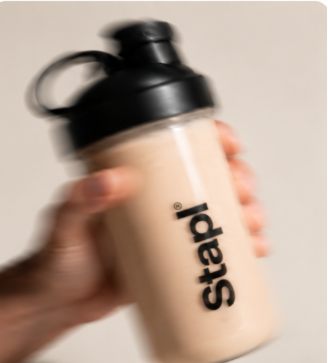
That backup is exactly why we made Stapl Original. It's a food, not a supplement: protein, carbs, fibre, healthy fats, vitamins and minerals in one scoop. Add water or milk, shake for 15 seconds, and you've eaten properly.
It isn't meant to replace every home-cooked meal. Just the ones you would otherwise skip.